
Ferry Boat to Alaska: the adventurous, sustainable alternative to a cruise
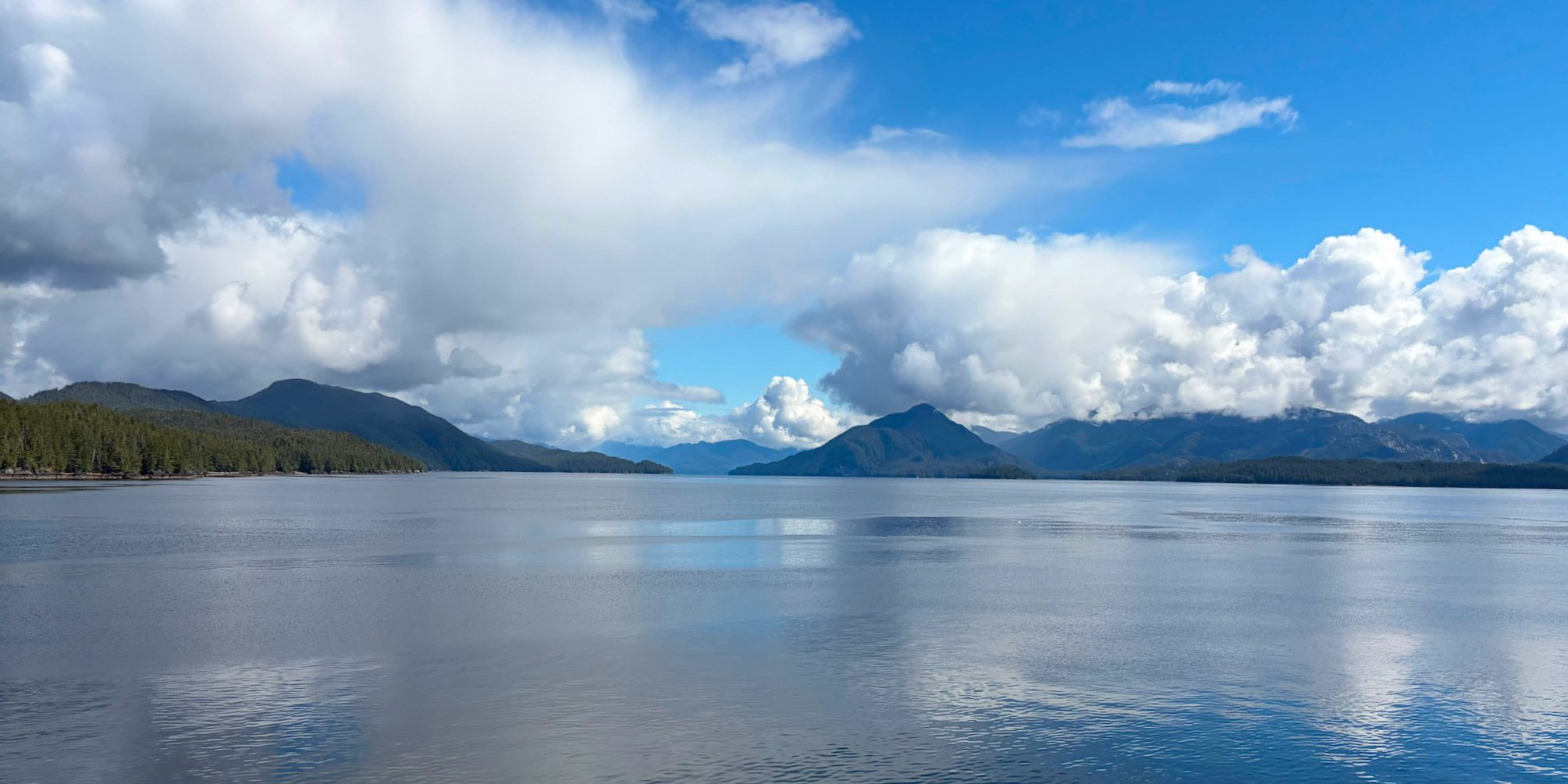
Taking the ferry boat to Alaska
A guest blog by our friend Leanne Vaeth
“Lookin’ for bears?” The man points to the binoculars dangling from my neck as I fumble with my hat, gloves, and glasses. “Watch for the grassy spots where the hills meet at a beach.”
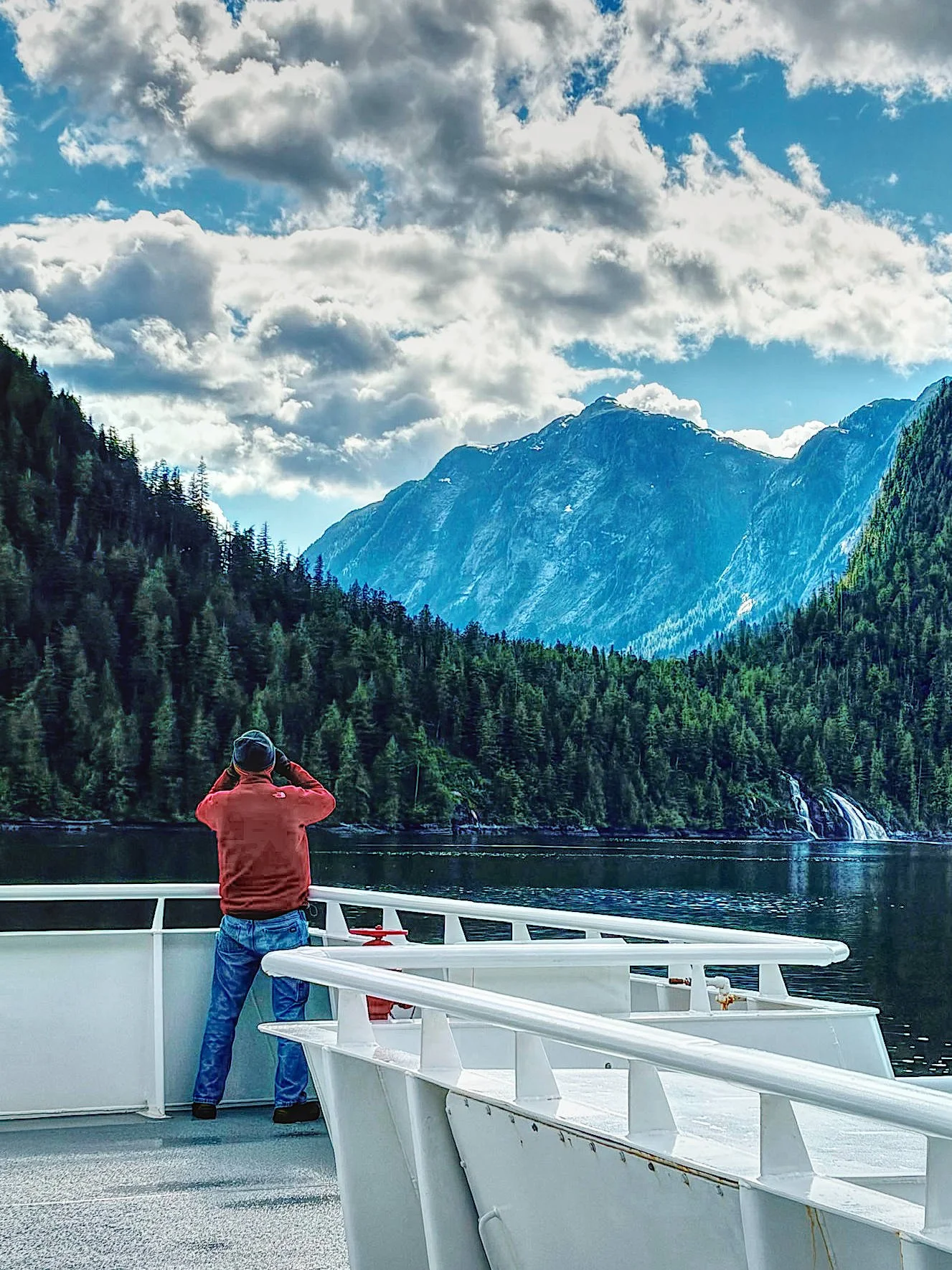
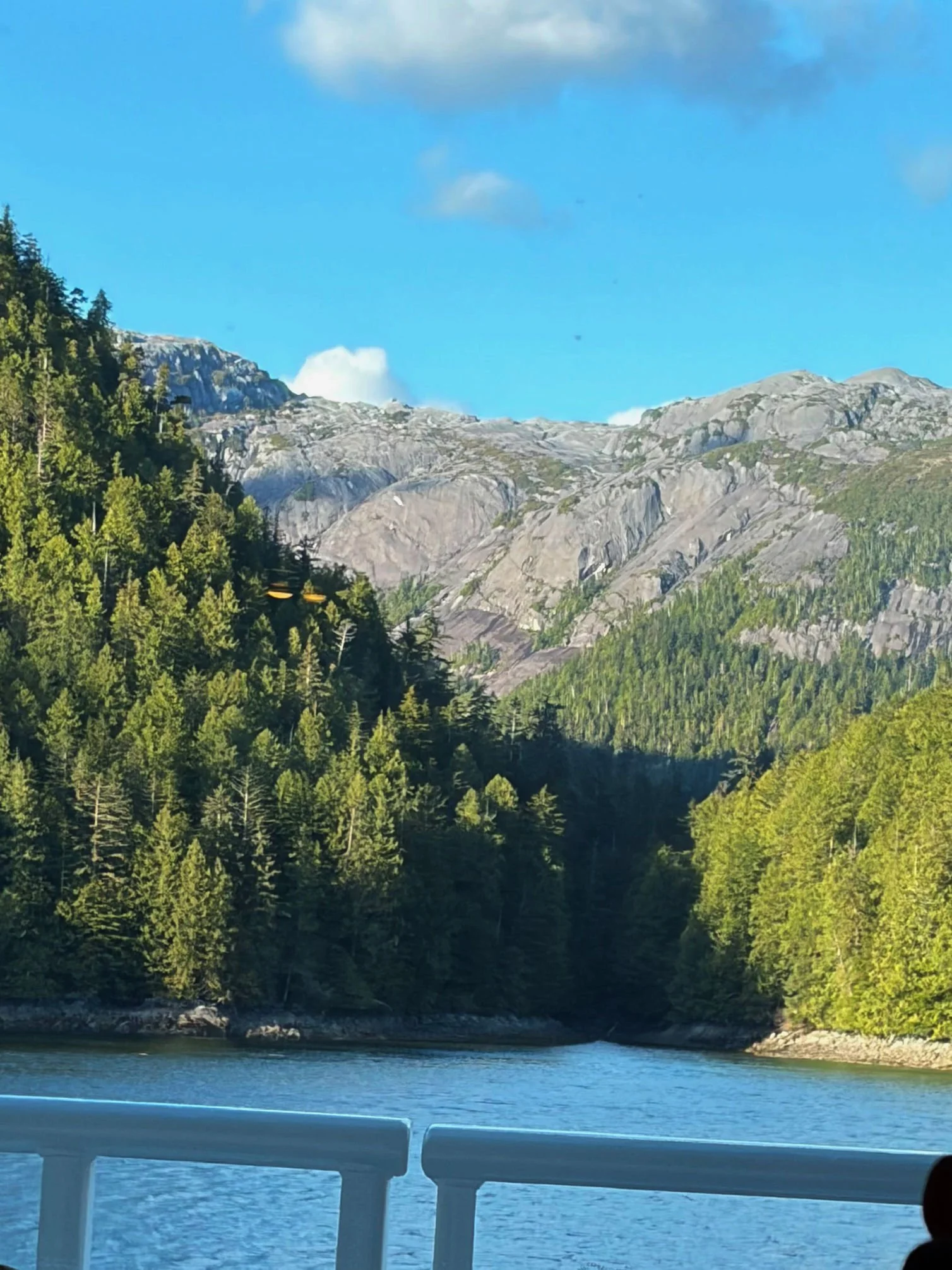
For the next hour, we stand at the railing sharing the binoculars and trading stories as the ferry continues through the narrow channels along the Canadian coast. We are halfway to Alaska and already the mountains and islands of British Columbia are delivering a spectacular show.
Prediction becomes reality and in a grassy expanse I spot a big black rump. It turns sideways for a full-body view, then lumbers into the nearby forest.
As our conversation unfolds, we discover that we attended the same high school and graduated just two years apart. Reminiscing, we conjure names of teachers, coaches, friends, and classmates; some we have in common. When he tells me he rediscovered love and met his second wife at his high school reunion, I share that I never attended any of mine.
Proving once again that you can learn a lot by talking to strangers, and that the world is a very big small town.
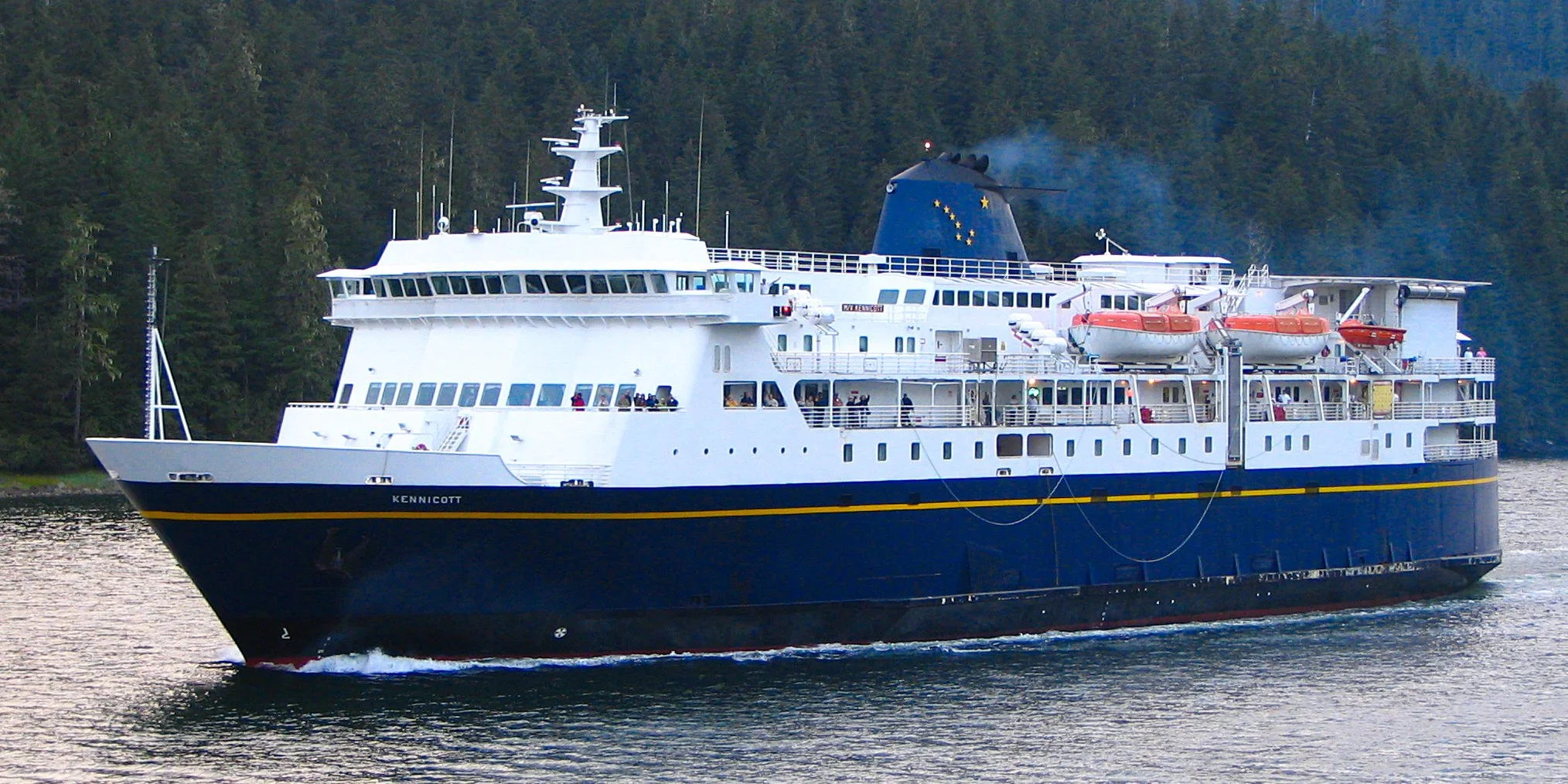
The last time I posted travel updates, my husband Peter and I were at the opposite end of the world, working our way south in Argentine Patagonia. We continued on for another two months in Chile, Argentina, Uruguay, Ecuador and Peru. Now I’m on my way to Juneau on board the Alaska Marine Highway System’s MV Kennicott with my friend Pam.
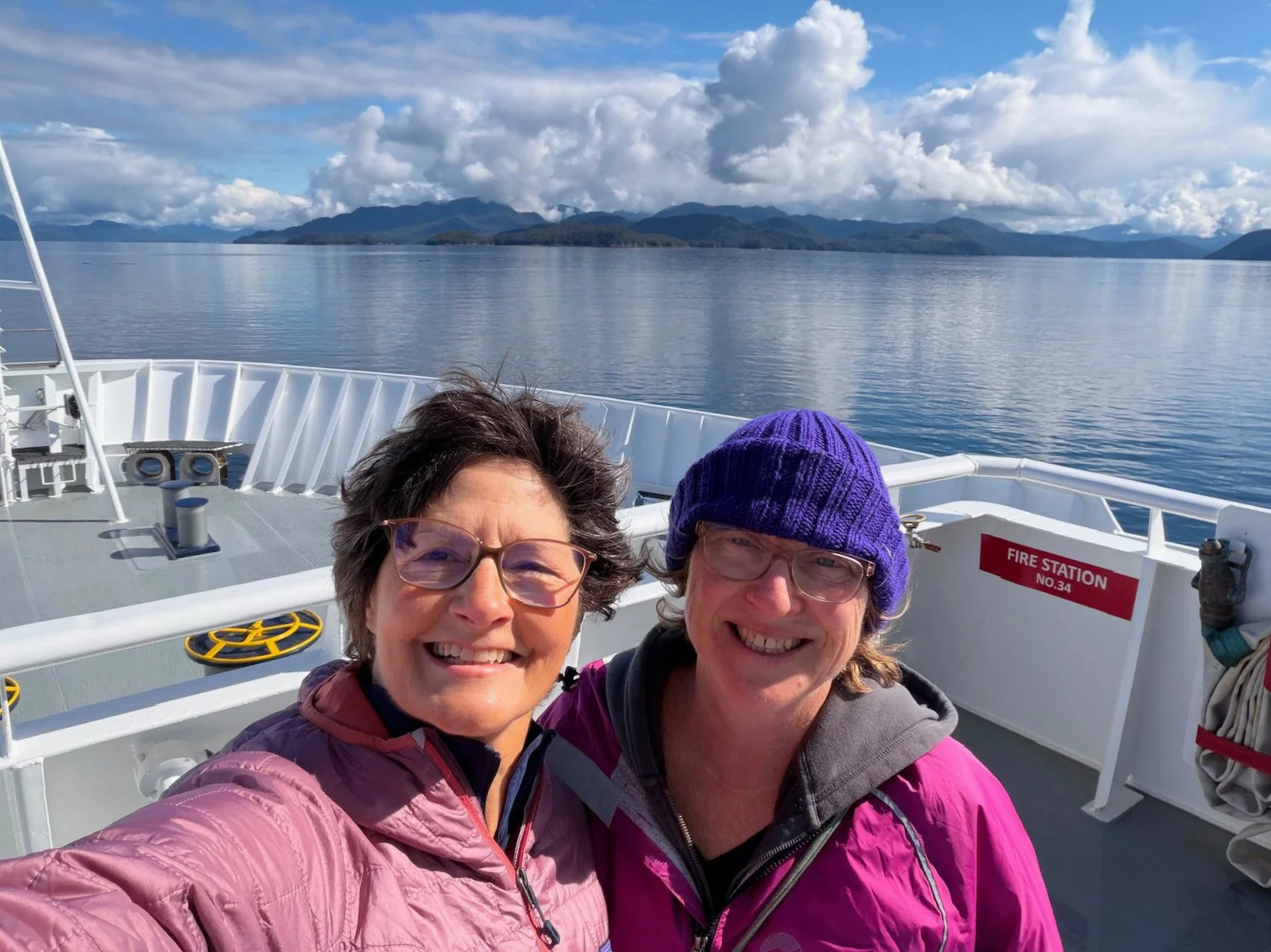
It’s a four-day trip from Bellingham, Washington, with stops in Ketchikan, Petersburg, Wrangell, and Sitka. As a mode of public transport, the ferries provide a lifeline to small communities not connected by roads or served by major airports. They are not intended to compete with the big cruise lines for tourist dollars. Instead, the routes stretch along the coast and all the way out to the Aleutians.
In lieu of luxury, we have puzzle tables, a tiny movie theatre and cafeteria, free wifi, no tipping (they’re state employees), and plenty of chances to meet people on daily walks or when spotting animal life on deck. A favourite way to pass the time is eavesdropping on young travellers discussing their plans to relocate to Alaska in search of adventure and jobs.
Each day, we travel the Inside Passage, hugging the shoreline and navigating channels, venturing to places larger ships cannot. Outside Petersburg, the sandbars shift with each season and the large logs carried down in storms now pepper the water’s surface. A deckhand at the bow feeds info to the Captain as they read the water. At times, I feel as though my outstretched arms could touch the shore on both sides of the ship. There are no days at open sea, no seasickness, just constant scenery: mountains, beaches, villages, and wildlife. It is stunning. Jaw-dropping. And absolutely amazing.
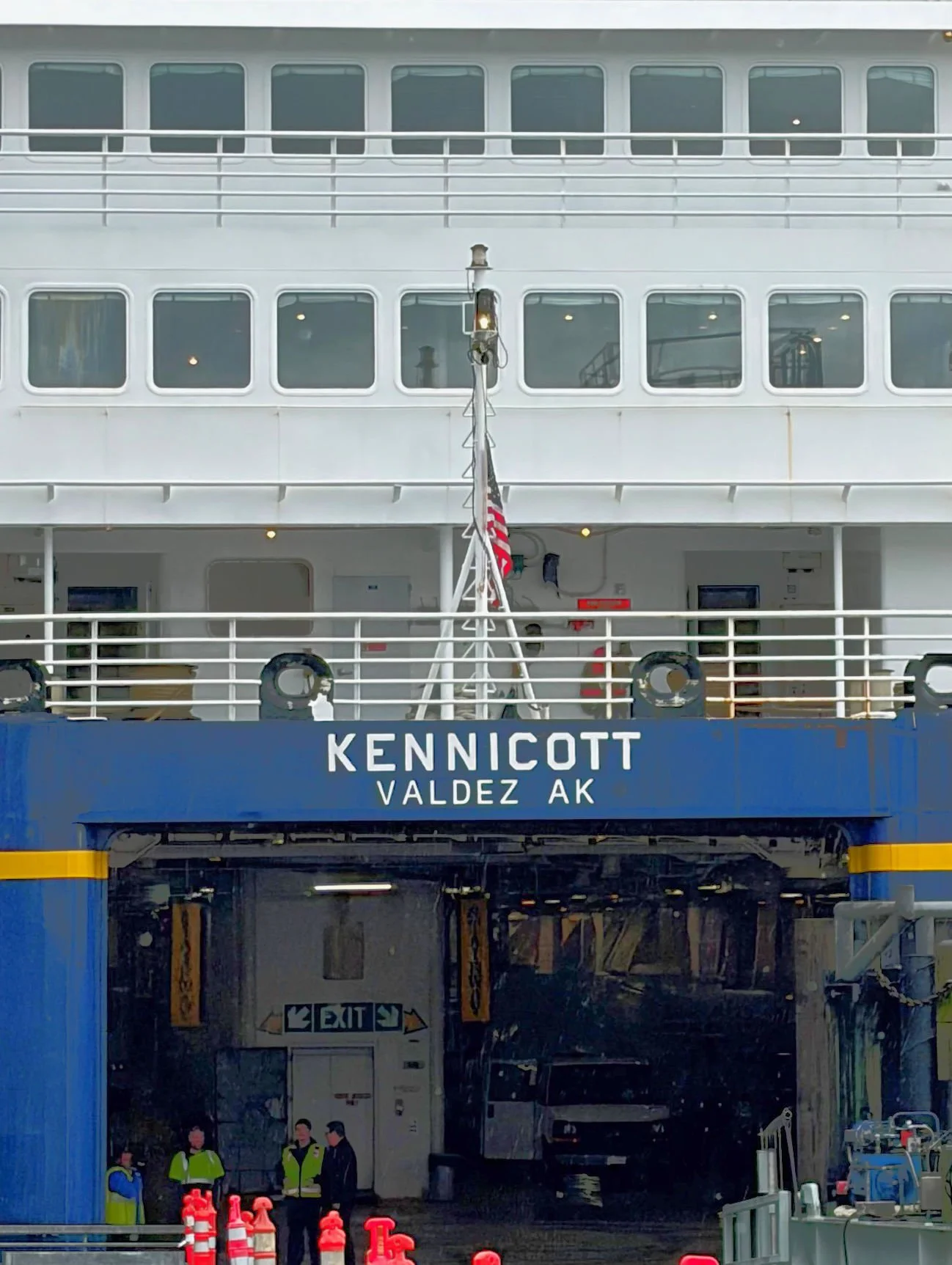
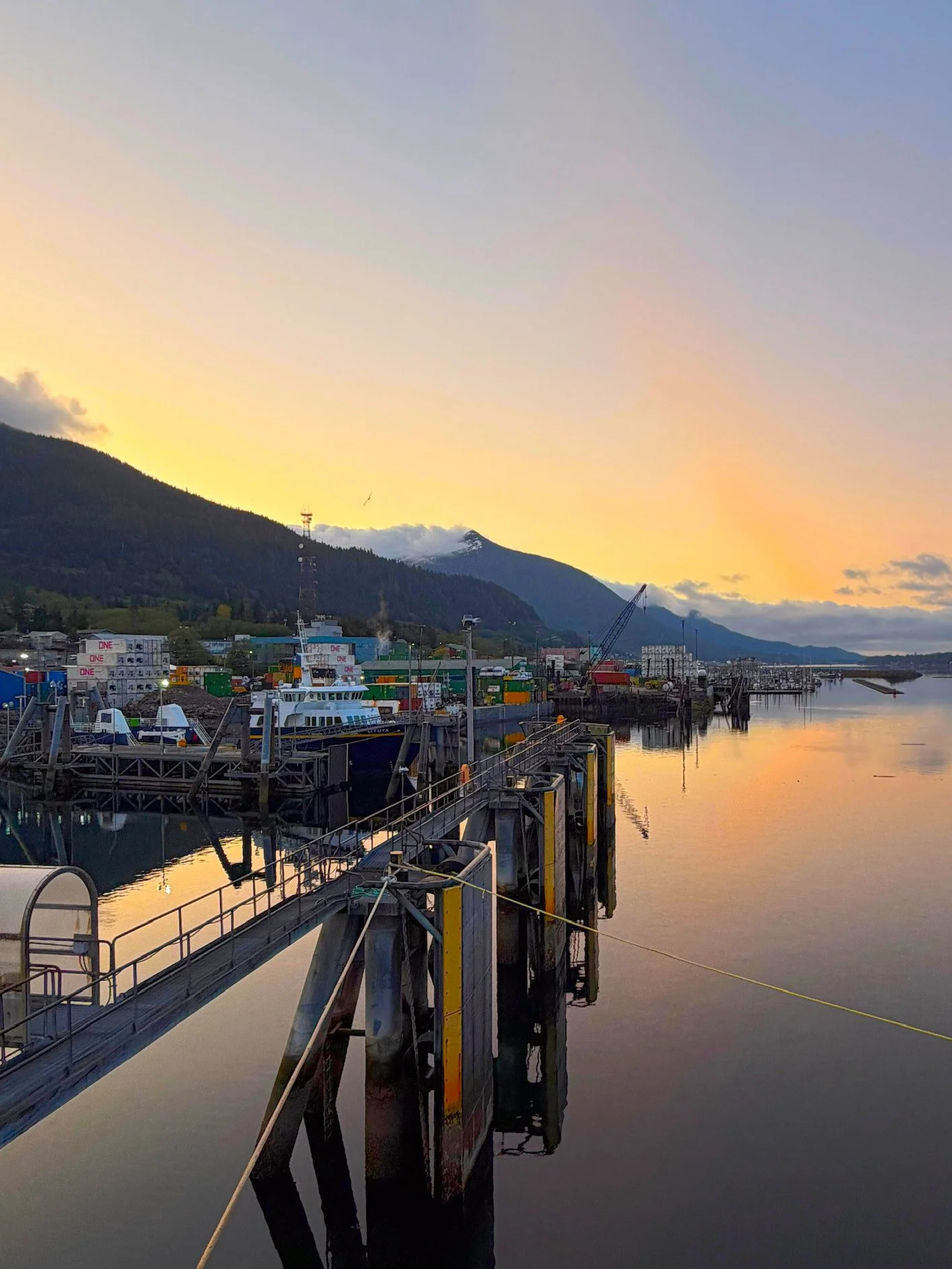
A movie played in the theatre explains that the first ferry service started as a private enterprise using an ex-US Navy landing craft in 1948. Facing bankruptcy, the business was acquired by the territorial government and expanded. Today, the vessels are versatile, with the MV Kennicott able to transform into a command centre when responding to oil spills. In 2002, the Alaska Marine Highway was designated a National Scenic Byway and then an All-American Road by the Federal Highway Administration due to its scenic, cultural, and archaeological qualities.
Alaska’s ferries are part of its state highway system. And, like its counterparts, the roads and bridges on land, the ferry system’s fleet is ageing and in need of major maintenance or replacement. For years, the system has been plagued by declining state resources and, most recently, two terms of a hostile governor whose preference is to mothball or privatise the service.
On board the MV Kennicott and its sister ship, the MV Columbia, you have a range of choices for sleeping. Depending on your budget and preferences, accommodations range from snoozing in a chair to bringing a tent to camp in on deck, to reserving a tiny berth with shared bathrooms or a private multi-bunk room with its own shower and bathroom.
In some communities farther north, the ferry is the closest thing to a restaurant that residents will see. During stops, the Captain may allow people to board and enjoy a burger and fries. Other times, members of the crew are known to frequent doughnut stands that provide sweet treats to local fishermen.
By the time we reach Juneau, many of the roughly 200 passengers on board now look familiar. Some clearly use this route for commuting and arrange an impressive setup in the solarium, complete with coolers, throw carpets, and a hammock. We also know it’s the locals who bring their own coffee-making gear onboard (we now consider ourselves locals—we even got asked for directions on shore).
The icing on the cake is Pam revealing a few of her many hidden talents. Appearing on our pillows each night is a chocolate candy, and decorating our bunk is an animal shape made out of our bath towels. Eat your heart out Viking and Carnival!
The MV Kennicott ferry boat
The MV Kennicott is designed to carry 499 passengers and has a vehicle capacity of 1,560 linear feet for operation in Southeast Alaska and 1,340 linear feet in Southwest Alaska, which is equal to approximately 67 to 78 twenty-foot vehicles.
There are 48 four-berth and 34 two-berth cabins, 24 roomettes, as well as 3 wheelchair-accessible cabins. The MV Kennicott onboard amenities include observation lounges with comfortable chairs, a covered heated solarium, a cafeteria-style restaurant, a movie lounge, showers, coin-operated lockers, writing and quiet lounges, and a children's play area. Fresh towels, pillows and blankets are available upon request for a small fee.
We think you will enjoy these…


Costa Rica is intense, intoxicating, incredible and one of the most biodiverse countries on earth. Most visitors to Costa Rica flock to the tourist honey pots of Manuel Antonio, La Fortuna/Arenal, Monteverde Cloud Forest and the Guanacaste/Nicoya Peninsula beach resorts. We, of course, prefer to get off the beaten track!